


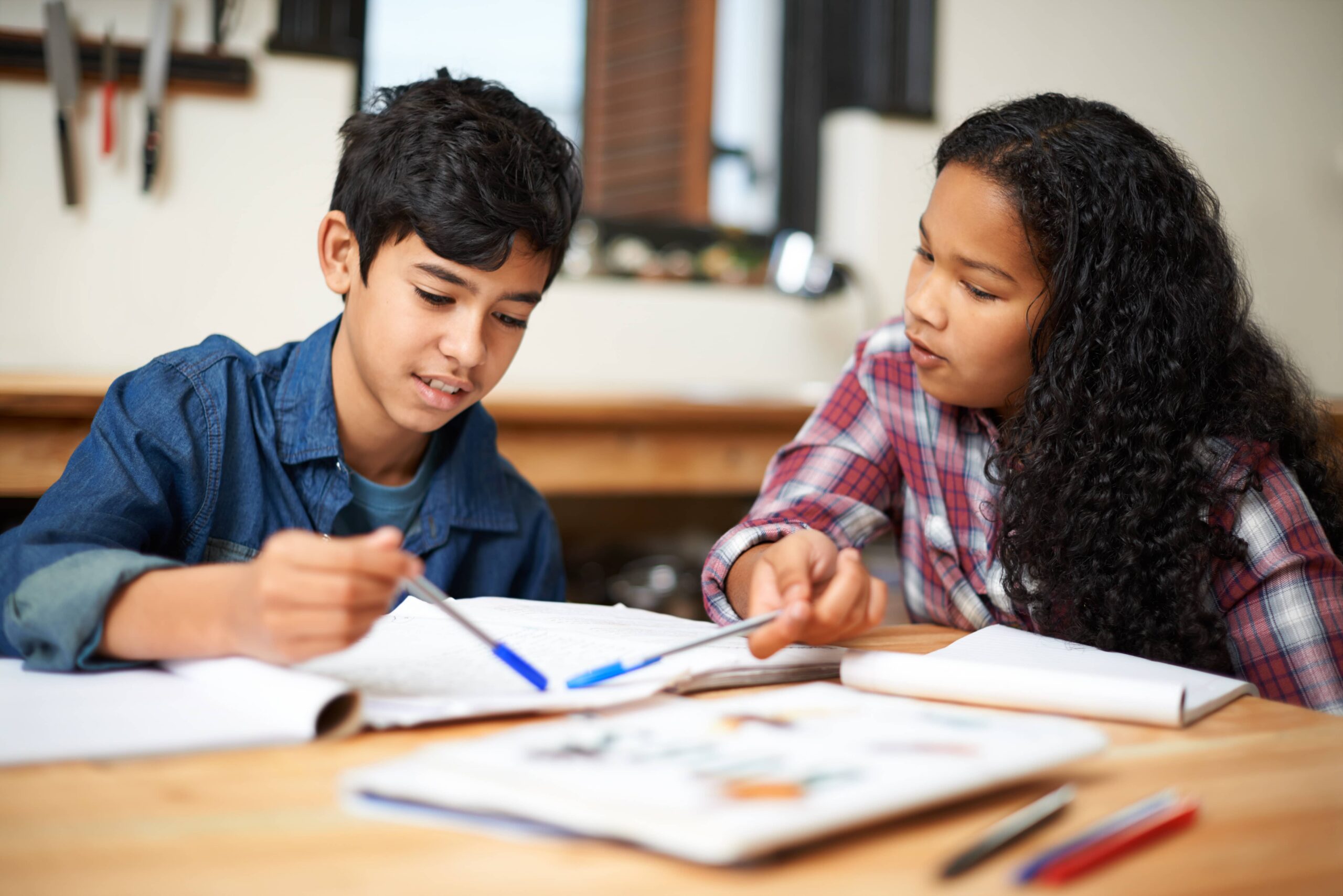
Sometimes, the most effective learning happens when students teach each other. Peer critique offers students a valuable opportunity to step into the role of teacher and strengthen important academic and social skills. Through the process, students learn how to think critically, communicate clearly, and collaborate effectively.
Peer feedback can feel overwhelming for many students, which is why scaffolding is essential for success. When you intentionally model language, give structured tools, and create a supportive classroom community, peer critique can become a powerful tool for personal and academic growth.
Keep reading to discover peer critique guidelines, feedback examples, and teacher-tested tips for helping students become more confident communicators and collaborators.
Benefits of Peer Feedback in the Classroom
The benefits of peer feedback in the classroom go beyond your classroom walls. When students participate in peer critique, they deepen their understanding of content knowledge and build independence.
Peer feedback provides benefits to students, including:
- Strengthening critical thinking
- Improving revision skills
- Developing self-reflection habits
- Building collaboration skills
- Engaging in academic conversation
- Increasing engagement through active participation
Peer feedback can be a useful tool for helping English language learners (ELLs) strengthen their communication skills in a low-stakes environment. Multilingual learners benefit from authentic opportunities to use academic language in meaningful contexts.
Scaffolding peer critique for ELLs allows them to engage more confidently with rigorous content while building their language proficiency. Through visual supports, modeled language, and structured activities, students of all proficiency levels can meaningfully participate in peer critique.
Teaching Peer Critique
Teaching your students how to give feedback to peers requires intentional, explicit modeling along with repeated practice.
Effective peer critiques have four key components:
- Specific: students should be able to pinpoint exact parts of the work.
- Constructive: their feedback should point toward improvement.
- Respectful: keep comments focused on the work, not the author.
- Actionable: after receiving feedback, students should know what to do next.
Clear expectations are essential for successful peer critiques. Without structure, feedback can be too vague or unproductive.
Providing students with peer critique guidelines can ensure everyone receives meaningful feedback.
A strong routine includes the following steps:
- Read the full piece before commenting.
- Identify at least one strength.
- Provide one or two specific suggestions.
- Use respectful language.
- Refer to rubrics, if applicable.
- Ask clarifying questions.

Peer-to-Peer Feedback Examples
Providing students with peer-to-peer feedback examples and anchor charts will move them toward independence and help students who may otherwise get stuck when they first get started.
Feedback can be strength-based, constructive, or question-based. Below are examples of constructive criticism to get your students started.
Strength-Based
- I like how you used strong transitions between paragraphs.
- One strength I noticed is how you organized your paragraphs logically.
- You provided good evidence to support your argument.
Constructive Feedback
- One suggestion I have is to explain your example further.
- Your conclusion could be even stronger if you add more detail.
Question-Based
- Can you explain your reasoning in more detail?
- How does this example relate to your main idea?
- Can you add more evidence to support this point?
By providing students with structured examples, they can move from vague or opinion-based comments to actionable feedback that’s academically useful.
Building Communication Skills Through Peer Review
When you incorporate peer review into your classroom routines, your students are learning how to communicate in academic and collaborative environments. Research-based classroom practices emphasize that structured peer critique can help students engage more deeply with learning and develop skills in giving and receiving feedback.
Through consistent peer feedback routines, students develop important skills like:
- Active listening
- Academic vocabulary
- Confidence
- Respect for different points of view
For ELLs, scaffolded peer critique provides guided, repeated exposure to meaningful language use.
5 Peer Review Tips for Teachers
Successful peer critique requires intentional planning and explicit routines.
These peer review tips for teachers can help you ensure that your feedback routines are both effective and sustainable:
- Model what good feedback looks like.
- Use structured tools.
- Start small.
- Pair students strategically.
- Practice regularly.

Teacher’s Corner: Advice from Experienced Educators
We asked members of our Teacher Advisors Group (TAG) to share their top tips for using peer critique in the classroom. Keep reading to hear what they had to say.
How do you teach students to give constructive peer feedback?
Benita Afonso: I teach students to give constructive peer feedback by modeling what effective feedback looks and sounds like. We discuss the differences between comments that are helpful and comments that are opinions. We practice using examples and role-play scenarios so students can become comfortable giving respectful and meaningful feedback.
Scott Gavey: I teach my high school learning support students to give constructive peer feedback through direct and explicit instruction. To keep students engaged, we try to make it fun by using examples of low-quality feedback and working together to revise them into meaningful, helpful feedback.
Natalie Lau-Chien: For feedback about writing, student projects or presentations, first we practice by using a sample presentation/project/piece of writing (a pretend example created by the teacher or from a student from a prior year). As a class/small group, we practice using example phrases or sentences frames that show unconstructive feedback, such as “you did awesome” vs constructive, specific feedback tied to the assignment expectations or rubric, such as “you used three precise, descriptive words in your paragraph” or “you have a strong hook that grabs the reader’s attention.”
What peer critique tools or strategies work best in your classroom?
Benita Afonso: The most effective tools in my classroom are checklists and sentence starters. Checklists keep students focused on specific criteria, while sentence starters such as “One strength I noticed is…” or “One suggestion I have is…” help students communicate their thoughts respectfully and clearly and help all students learn to effectively develop their vocabulary and their communication skills. These tools provide structure and increase the quality of student feedback.
Scott Gavey: I model/role-play what effective feedback looks like and what it does not, providing clear examples and non-examples. I also use simple rubrics, so students know exactly what components to include.
Natalie Lau-Chien: Giving the students sentence starters or example feedback is helpful. A checklist based on the assignment criteria is also helpful to guide students on what to check for and identify each student’s strengths and show where they can suggest their peers improve. Rubrics with expectations for peer conferences are also helpful in showing students what is expected of them during a peer conference.
What benefits have you seen from using peer critique or peer-to-peer feedback in the classroom?
Benita Afonso: Peer critique helps students become more reflective learners and strengthens their understanding. Students often notice strengths and areas for improvement in their peers’ work that they can apply to their own assignments. It also promotes collaboration, communication skills, and a sense of responsibility within the classroom community.
Scott Gavey: One benefit I have seen from using peer critique is that students become more thoughtful in their responses. Instead of saying the first thing that comes to mind, they pause, reflect, and consider how to provide feedback that is helpful. Over time, this leads to more meaningful discussions that last more than a few seconds.
Natalie Lau-Chien: Peers often notice things that teachers may not. Also, students can get more feedback from multiple peers rather than only waiting for feedback from a teacher that may not be able to confer with every student in a class period. Teachers can also informally assess student understanding of the concept or success criteria when observing the type of feedback that students are able to provide their peers.
With intentional planning and consistent practice, peer critique can become a meaningful learning routine for all students. By giving your students the language and structure to share feedback, you can create a classroom where students learn from one another and grow together.

Looking for resources to support your ELA instruction? Check out our K-12 Reading & Language Arts Programs to help your learners grow.
Thank you to our blog contributors: Benita Afonso, ENL/Building Point Person for grades 1 and 2 in Sleepy Hollow, New York; Natalie Lau-Chien, ELL teacher in New Hampshire; Scott Gavey, Secondary Special Education Teacher, Pennsylvania