

Teaching goal setting is more than just a classroom activity—it’s a life skill that students will carry with them for years to come. Whether they’re learning a new hobby, managing responsibilities at home, or planning their career, the ability to set goals will shape how they approach challenges in and out of the classroom.
Why Goal Setting Matters
Research shows that students who can set and monitor goals are more engaged learners who are better equipped to overcome challenges.
When students can identify their goals, learning becomes more focused and intentional. In the process of goal-setting, students learn reflection, persistence, and self-monitoring—all skills that support long-term success both in academics and beyond.
Teaching Goal Setting to Students
Goal setting should be approached as an ongoing process rather than a one-time activity. Teaching goal setting involves explicit instruction, modeling, and frequent opportunities to revisit and revise their goals.
Effective goal setting in the classroom starts with students knowing what they are working toward, why it matters, and how progress will be measured along the way.
The methods will look different depending on students’ developmental levels, but the foundation remains the same: goals should be meaningful, attainable, and connected to learning.
When you’re teaching elementary students goals should be:
- Concrete
- Short-term
- Focused on one specific skill or behavior
For this age group, it’s especially important that you model the process for your students. Visual supports like charts, checklists, or simple goal tracker visuals make progress feel more tangible.
It’s also important for students to reflect on what helped them move closer to their goal. This emphasizes the value of practice and persistence.
When you’re teaching secondary students how to set goals, provide time for:
- Self-reflection
- Re-evaluation
- Explaining their thinking
This helps them develop self-regulation skills that they’ll need in the future, both in and out of the classroom.
Students will benefit from learning how to break larger goals into smaller, more manageable chunks. You can guide students to analyze their past progress, identify strengths and areas for growth, and choose strategies that will support their improvement.
Start with Conversations About Goals
When talking to your students about setting goals, present them as flexible plans that can evolve as learning develops. This will help them to view goals as tools for growth.
Elementary Students
For elementary students, it’s helpful to connect goals to everyday activities like developing fact fluency or improving handwriting. As you discuss setting goals, model reflective language for your students. This reinforces the concept that effort leads to improvement, which is foundational to a growth mindset for students.
Secondary Students
For secondary students, you can prompt discussions with questions such as:
What’s one specific area you want to improve?
What strategies have helped you in the past?
Conversations with secondary students should encourage them to connect goals to personal responsibility and future-planning. Providing structured discussion time, such as conferences or written reflections, allows students to articulate their thinking. These conversations also help students create goals that are realistic, measurable, and aligned with their needs.
Introduce SMART Goals
Once students understand the importance of setting goals, the next step is to help them create goals that are both clear and achievable. This is where SMART goals provide a helpful blueprint.
SMART goals are Specific, Measurable, Achievable, Relevant, and Time-bound. This helps students move from vague aspirations to actionable and focused goals. SMART goals help students think more intentionally about what they want to improve and how to measure their progress.
Elementary Students
For elementary students, SMART goals should be modeled explicitly. SMART goals at the elementary stage should remain short-term and flexible. It may be helpful to focus on just a few elements at first, such as being specific and measurable.
Visual aids and sentence frames are helpful scaffolding tools for goal-setting. Check in with your students regularly to help them see their progress and build confidence in the goal-setting process.
Secondary Students
Secondary students are able to work with the full SMART framework and apply it more independently. At this age group, SMART goals can support academic, behavioral, or personal growth goals.
Providing SMART goals examples for students can be helpful for learners who benefit from reference tools. Pairing SMART goals with a student goal tracker gives students a helpful visual to monitor their progress.
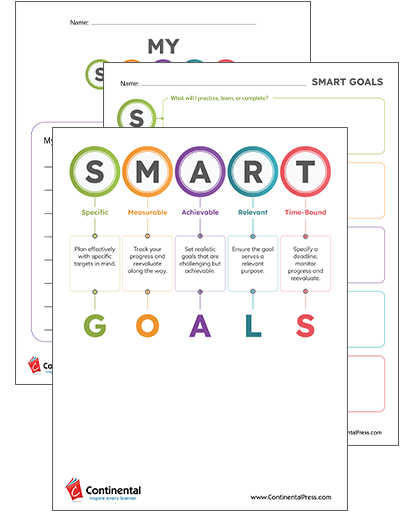
FREE SMART Goals Printable Bundle
Our free SMART Goals bundle includes a classroom poster and adapted worksheets for all grade levels. Sentence frames support younger students and ESL learners, making goal setting clear and accessible for every student.
8 Goal-Setting Activities
Goal-setting activities work best when they are straightforward, easy-to-use, and directly connected to classroom activities. Effective goal-setting activities emphasize reflection and progress— which will vary depending on the age of your students.
Elementary Students
In elementary classrooms, goals should be easy to understand and quick to revisit. Goal-setting instruction can be incorporated into familiar routines such as morning meetings, small groups, or daily reflections.
For these learners, goal-setting activities should be short, visual, and simple. Focus on one skill at a time rather than setting multiple goals at once.
Secondary Students
In secondary classrooms, making goal setting practical means integrating it into assessments, assignments, and providing reflection opportunities. Older students benefit from short, structured reflection prompts that encourage them to consider their progress, what helped them reach their goals, and how they could adjust their strategies in the future.
Older students are better able to incorporate reflection, data, and personal accountability into their goal-setting. When teaching goal-setting to secondary students, the ultimate goal is to help them apply these strategies independently.
Goal-Setting Ideas
Teaching goal setting should be interwoven into your everyday instruction. When goals are connected to your daily lessons or routines, students are more likely to understand their purpose. Below are our favorite ideas to incorporate into your daily lessons.
- Weekly focus goals
Students may want to choose one goal to focus on for the week, such as mastering a sight word or setting a timed goal for fact fluency.
- Goal reflection prompts
Provide students with simple prompts like “I worked on…” or “I learned ___ new sight words this week.”
- Progress check-ins
Use checkmarks, graphs, or colors to help students visualize how close they are to meeting their goal.
- Class goal setting
Setting a shared class goal helps younger students build a sense of classroom community.
- Assessment goal setting
Have students set a goal before an assessment and reflect on the results afterward.
- Goal revisions
Encourage students to formatively evaluate their progress and revise their goals accordingly.
- Strategy tracking
Provide structured time for students to evaluate the effectiveness of the strategies they used.
- Written reflection
Utilize written reflections to allow students to analyze their progress and plan their next steps.
Clear goals and visible progress make these activities ideal for reinforcing student growth goals ideas.

Using Trackers With Students
Goal and progress trackers are excellent tools, especially for visual learners. When used intentionally, they can encourage students to take ownership of their learning.
Trackers can help students see progress over time, helping support reflection and self-monitoring. Visual trackers can help make abstract goals more tangible for students.
When choosing the right tracker for your students’ developmental needs, keep in mind that too much detail can feel overwhelming. They may also discourage students if progress feels slow or unclear. It’s helpful to keep trackers both simple and flexible.
Below are some key considerations for using trackers in the classroom:
- Keep them private
- Use public tracking only for collective goals
- Limit the number of goals
- Build regular check-ins
- Emphasize progress over perfection
- Choose developmentally appropriate trackers
- Revisit and revise
Goal Setting Strategies for Long-Term Success
In order for goal setting to have a lasting impact, it should be consistent, reflective, and student-centered. Keep the following strategies in mind as you weave goal-setting into your instruction.
- Schedule brief check-ins in your lessons
- Model reflection for students by showing them how to revise goals
- Gradually release responsibility as students gain confidence
- Emphasize habits over outcomes
- Celebrate growth thoughtfully
When goal setting is incorporated into daily instruction, it becomes more than an instructional strategy—it becomes a skill that students can carry with them throughout life.